I've been reading outside my comfort zone a lot this year. Surprisingly, the more I venture out, the more I realize that my comfort zone kept me limited. I liked much more than I expected.
A Moveable Feast is one such surprise. I enjoyed it far more than I hoped for. I liked it so much that I'm here writing a book review after several months!
It's only 250 pages but I have a lot to chat about. So, grab a cup of your preferred drink and settle down. Let's chat about gossip and writing ☕️✍️
what is A Moveable Feast about?
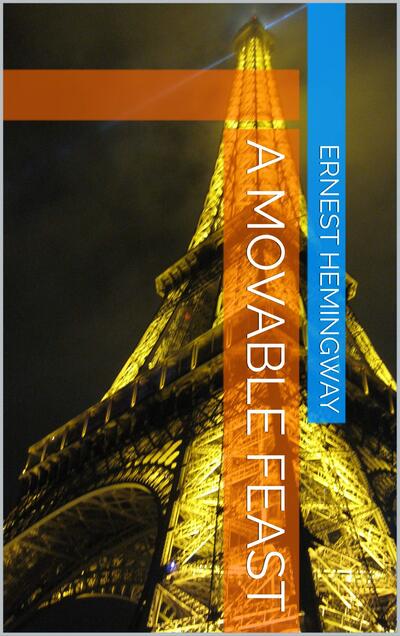
Hemingway's memories of his life as an unknown writer living in Paris in the twenties are deeply personal, warmly affectionate, and full of wit. Looking back not only at his own much younger self, but also at the other writers who shared Paris with him - James Joyce, Wyndham Lewis, Scott and Zelda Fitzgerald - he recalls the time when, poor, happy, and writing in cafes, he discovered his vocation. Written during the last years of Hemingway's life, his memoir is a lively and powerful reflection of his genius that scintillates with the romance of the city.
my thoughts
If you are lucky enough to have lived in Paris as a young man, then wherever you go for the rest of your life, it stays with you, for Paris is a moveable feast.
I had zero plans of reading this. In fact, I didn't know it existed until a few weeks ago. The only Hemingway writing I knew of was The Old Man and the Sea which I had read wayyy back in high school. It's so far outside my comfort zone—I barely read classics let alone self-indulgent non-fiction writings by older authors—that I wouldn't have come across it naturally without something pushing me in a new direction.
A couple of my friends roped me into doing the 52 Book Club Reading Challenge in 2026. The hardest prompts for me were a pair: 1) biographical fiction and 2) non-fiction about the same person. After struggling to find a good pair of books myself, I asked my book club for recommendations. They gave a handful of pairings and one of them was A Moveable Feast and The Paris Wife by Paula McLain. I picked this pair because it seemed the easiest. And I'm glad I did! Even if it led me down a rabbit hole.
Right from the first page, Hemingway's love and nostalgia for Paris bleeds through. I LOVE the way Paris is described in this book. It's also so different from the image of Paris that I have in my mind that I couldn't help but fall in love with it. Through this, I understood why so many loved the city back then too. It doesn't show why Paris became the "city of love" but it does show how it became a hotspot for artists of that generation.
All generations were lost by something and always had been and always would be.
The book is a compilation of stories from his time in Paris. Hemingway wrote A Moveable Feast in the last years of his life, pulling all the material from his old journals which he wrote during his time in Paris. Hence, it reads easy like journal entries too.
We see chapters about how he felt when he first moved to Paris, read about the different houses he and his first wife lived in, how he viewed the different streets of Paris, which cafes he liked and why, who hung out and the different cafes, and a handful of the artists whose paths crossed with his. It was interesting and weird to read about him bumping into artists like Scott Fitzgerald and Picasso and James Joyce. All the classic authors somehow blend into an "old period" in my head so it was interesting to see them live in the same city and interact over drinks and talk about their work with each other.
It felt like a fictional world where all these famous people somehow are put in the same spot, but it was that Paris drew all of these artists from different parts of the globe because it provided them an affordable place to live where they could create. I got a newfound appreciation for the city after reading it from Hemingway's experiences.
In Paris, then, you could live very well on almost nothing and by skipping meals occasionally and never buying any new clothes, you could save and have luxuries.
Hemingway and his wife Hadley were living on little money in Paris while he tried to become a writer. Hemingway talks a lot about how shabby their homes were in different parts of the city, how they'd spend as little as possible, and how he'd take other writing jobs once in a while to earn some income while he tried to write a bigger piece of work.
The Paris in my mind is a super expensive city flocked by tourists and the most fashionable people. The picture he painted was so different. But at the same time, his Paris has a charm that my modern image doesn't. They lived on little and still managed to go to cafes regularly, enjoy alcohol, and even take vacations! There is no way the modern Paris would be affordable to a struggling writer and his wife.
He spends quite many pages describing the different streets and cafes, what drinks and food is good at each, and how the river looks at night. It felt like reading a passionate blog post haha. I wonder how many of these places still stand today. At least Shakespeare and Company still stands.
Coincidentally, I read this book when the Paris protests were going on. Seeing videos of the city going through unrest for good education while reading about how it used to be a budding place for artists was an interesting experience. It made me sad about how we lost our way, across the world.
We ate well and cheaply and drank well and cheaply and slept well and warm together and loved each other.
It was interesting to read about how Hemingway and his wife lived. They were an outlier in those days because they were clearly in love and happy about being married. Apparently, everyone in Paris then way against love and it was common to have multiple partners or not commit to marriage. But the Hemingways were happily married (at least, for a few years).
Hemingway's love for his wife Hadley and their life shone through the page. It was so nice. I loved reading about their daily love. They got married after a whirlwind romance and quickly made their way to Paris. Hemingway would write every day and return home to Hadley and they'd go out to drink or meet friends and would enjoy each other's company. He writes well about their time even after they had their son Bumby.
Like any man's point-of-view, Hemingway's writing was clearly one-directional. It didn't address everything about their life. We read about his days and his struggles but we did not see much about what Hadley and their son did during the day. I was very curious about how they managed to raise a son on such less money. I was curious about how the couple went out frequently at night even after having their son—who took care of him? Those things were unanswered.
It felt like looking at his history through rose-coloured glasses. Which, honestly, may be the right way to describe the novel. He was clearly nostalgic about his early days when he wrote this. It is entirely possible that he cut out most of the bad parts or viewed them through better, more privileged, eyes. The only truly "sad" thing he wrote about was when Hadley lost all of his writing on a train once and how it was devastating to lose several months of his work with nothing left.
The one who is doing his work and getting satisfaction from it is not the one the poverty bothers.
Since Hemingway is earnestly (pun intended) working on his writing with the hope of his writing career taking off, a big part of his life in Paris is about writing. He talks about his writing routines, which cafes he frequented to write, what he'd do when he was frustrated or satisfied, and more.
In one chapter, he talks at length about hunger. He describes how he'd skip meals and would be hungry every day. And he would talk about how that hunger helped him be a better artist and writer. I've not seen other writers or artists talk about hunger this way so it was interesting and compelling to me.
He mentions writing techniques that he uses as well. I've heard of "the Hemingway bridge" before, a creative workflow technique which Hemingway used. In fact, I used it for a while with my blog posts. It works quite well when you're working on a big piece over multiple days and you need to keep your motivation going. I still use it sometimes. So it was cool to read about it from the man himself.
He was very disciplined about his writing. It was inspiring to see. Most of us don't have that kind of work ethic or dedication or determination. He listened to feedback from his wife and Gertrude Stein. He appreciated others' writings and actively worked to make his better. He put his ALL into his work. (And it's no wonder that the theft of his writing under Hadley's care broke an unbroken part of trust, which he probably never gained back.)
It felt good to see him do everything he could and get results from it. The book ends when his "good" time in Paris ends. By then, he had a few small successful publications and got a deal for his first novel The Sun Also Rises. Despite all the foolish mistakes he did, I admire the man for how he approached his writing and did his best for it.
To have come on all this new world of writing, with time to read in a city like Paris where there was a way of living well and working, no matter how poor you were, was like having a great treasure given to you.
The book's tone is fairly serious and not humourous, even when he talks about funny things. I assumed it would be like sort of boring like many classics and while the initial chapters were easy to read, they were a bit monotonous. I actually hit a lull around 40% where I started getting really bored by it.
About halfway through the book, I stopped looking at it seriously and suddenly realised how fun it was. It's actually a super gossippy book!
Hemingway writes with a straight tone so it isn't immediately obvious. But he is clearly a gossip queen. And he wrote all the random things that are boring if you look at it seriously but are super fun if you keep your mind open. I had SUCH FUN with the book in the second half. It had the randomest things.
For example, there's a totally unnecessary chapter detailing the story of his interaction with another artist. After a series of events, he eventually meets that person and gives them something. And they, being annoyed after finally getting through rehab and their addiction, immediately get angry at Hemingway and throw milk bottles to get him to leave. And he wrote, "for a poet he threw a very accurate milk bottle" 😆
The chapters with Scott Fitzgerald were quite funny too! I had a gag when I saw how Fitzgerald, right after meeting Hemingway for the first time, enquired about whether Hemingway slept with his wife before they got married. And then the chapter where Hemingway told Fitzgerald to go the Louvre to look at the statues to compare sizes?! The most boy thing to do, I swear 😂
He also writes about a quarrel that Stein had with her lover which he overheard and he writes that he left quickly because he shouldn't be overhearing it, and then he PUBLISHED IT?! What a gossip.
It was fun to read about these famous people doing basic human things—being foolish and drunk and in love and having nonsense conversations while also doing great work.
He liked the works of his friends, which is beautiful as loyalty but can be disastrous as judgement.
Through it all, his brilliant writing shines through. He is known for concise writing where everything unnecessary is stripped away. This biographical compilation is feels less stripped away because of all the small details about Paris. But I believe that are all intentionally kept because each sentence adds to the Paris of that time.
In between anecdotes of his days, there would be lines of sharp insight and meaning which made me pause. He captured the weight of small every day things that people do really well. For example, the way some artists spoke or took actions, how some people looked, and even how some people lived which affected their work.
It was interesting to see how the mind of a writer works. You can tell how he has honed his perception to easily pick the most compelling aspects from what's happening around him. Seeing this, it's no surprise that he went on to write brilliant books inspired by real events.
The only thing that could spoil a day was people and if you could keep from making engagements, each day had no limits. People were always the limiters of happiness except for the very few that were as good as spring itself.
Despite all of the fun, Hemingway's writing is the same "straight"/serious tone throughout the book. You can tell that he sees himself as a serious man who doesn't indulge in nonsense and stays away from drama (of course, until he created it himself later). He paints himself as a "wise" man that people often came to to talk through things.
The book definitely feels edited. You can tell that this is a very specific view that a proud man has of himself in his youth, before he made humongous mistakes. You can tell that he loved that life and that wife extra because of the golden period it represented. He really tried to not mar anything with bad recollections in this. I wonder if it was a coping mechanism that he used to try to be cheerful in the last days of his life.
The novel ends on an abrupt and shocking note. It doesn't end when he leaves Paris for good, it ends when that golden period of his life ended. It ends with a reference to his affair which led to the end of his first marriage. I did not know about his personal so I was completely taken by his love for his first wife. So when he alluded to the affair, I was SHOOK.
It led me into a rabbit hole. I read the entire Wikipedia page on Ernest Hemingway. I was definitely shocked by how his personal life went after the events described in this book. He married his mistress, cheated on her later and married the woman he cheated with, and cheated on her too and married that woman. 4 consecutive marriages until he died!
I thought a lot about this book and his life in the days after I read it. I wouldn't mean to but my mind would go to something that happened in the book and then how his life went on, and I would feel sad for him. He was a brilliant writer but possibly a lost man who was slowly losing himself in different ways until he couldn't take it anymore. Reading about the end of his life was so sad, especially knowing the pattern of suicides in his family.
I felt melancholic every time I remembered that he wrote this book at the end of his life, after going through a lot of trauma and injuries, and how it is full of happiness and love. He seemed the happiest when he was hungry and poor. They lived cheaply and they lived well.
I found it interesting that he wrote about his first wife with so much love while being married to his 4th wife (his longest marriage). I was even more intrigued when I found out that his 4th wife, Mary, was editing his works by then. In fact, he didn't complete this novel before he died. His wife compiled it from his manuscripts, edited a bit, and published it. I wonder how she felt to put it together, seeing everything he wrote about that time of his life, while she probably still mourned him.
After I read The Paris Wife by Paula McLain—really nice book, answered a lot of my questions about Hadley and other aspects of their life, and it details the deterioration of their marriage which was soooo shocking—I went down another rabbit hole and found that there is some controversy about Mary's edits of the book.
After Hemingway's manuscripts were displayed in a museum, people found out that she did quite a few edits to the novel before publishing it. Apparently, she rearranged the chapters to be chronological, breaking the thematic arrangement that Hemingway did (and it actually showed because cafe-related chapters were spread out weirdly instead of being held together to tell a concept).
Apparently, Mary also heavily edited the end to place more blame on Pauline (the 2nd wife, whom he cheated on the first wife Hadley with). I read that Hemingway's writing originally placed most of the blame on himself. That led to one of Pauline's grandsons publishing another version called A Moveable Feast: The Restored Edition which is said to have the original arrangement. It also has some extra chapters about the end of their time in Paris and apparently says a different story about Pauline and Ernest. However, the restored edition ALSO has some controversy because of other edits that it has.
Don't ask me why but I read more about Mary, Hadley, and Pauline and even one of his children's Wikipedia pages. It's just.. sad about how it all ended. It is entirely possible that Mary edited the novel (which she published about 3 years after Hemingway's death) to fit what she believed. I wonder why she would place blame on Pauline when she herself was an "other woman".
Reading about the end of Ernest Hemingway's life in Hadley's point of view in The Paris Wife was heartbreaking. I can't imagine the amount of pain Mary went through to return to that house, clean it, make funeral arrangements, and call Hadley to let her know the news. It's just sad all around.
I want to read A Moveable Feast: The Restored Edition at some point. I'm curious about the arrangement of the novel and the extra chapter(s) about Pauline at the end. Now that I've read The Paris Wife (widely considered to be a highly accurate depiction of Hadley's life) and know just how much shit went down and how bad it was, I'm curious about what Hemingway wrote about it.
I also want to read more of Hemingway's works now. Starting with The Sun Also Rises which was written during his first marriage. I'm lowkey curious about Hemingway's biography too—the one by Carlos Baker. I read somewhere that he interviewed Hadley for it.
They aren't a priority right now, though. I know way too much about Ernest Hemingway. I'm keeping my eye out for the restored edition and may pick up other books if I come across them, but I will take a break for a while at least.
There is never any ending to Paris and the memory of each person who has lived in it differs from that of any other. We always returned to it no matter who we were or how it was changed or with what difficulties, or ease, it could be reached. Paris was always worth it and you received return for whatever you brought to it. But this is how Paris was in the early days when we were very poor and very happy.
overall
In case it wasn't obvious, I highly recommend A Moveable Feast! I'm going to be thinking about it, The Paris Wife, Hemingway's life, that time, and that Paris for a long time.
chat with me!
Have you read A Moveable Feast? Or other works by Ernest Hemingway? Have you gone on any rabbit holes about people's lives? What are the most interesting or shocking stories that you have come across?

Sumedha spends her days reading books, bingeing Kdramas, drawing illustrations, and blogging while listening to Lo-Fi music. Read more ➔