Humans are inherently creative beings. We have seen so much innovation and change just in the past 10 years. Pick any decade and you'll find a list of innovations, discoveries, or improvements. Creativity isn't just coming up with new ideas—it's a way of living. It's keeping your eyes and mind open, finding something in everything, finding connections, and more.
Unfortunately, not all of us are taught to be better at creating. In fact, my schooling was 90% rote learning. Arts were always cancelled or deprioritised in favour of math and science. In the latter, we were simply told to learn what's there and weren't taught to connect it with other concepts or think out of the box. It's funny that my country predominantly prefers raising engineers but doesn't recognise that engineering involves being creative.
When I started enjoying non-fiction books, I quickly gravitated towards books that explored creativity and provided advice on how to do it better. Since it's Non-fiction November (in the bookish world), I thought that this is the perfect time to talk about them! Here are 5 books on creativity that I loved.
1. steal like an artist by austin kleon
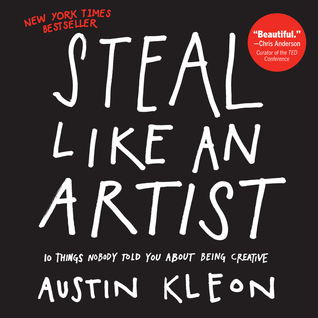
Starting off with something easy and short. Steal Like An Artist is a short book that doesn't require you to spend a lot of time reading. If you're worried about having to sit down to read for a long time or honing your concentration, this book is perfect.
Filled with actionable tips and illustrations, the book shares how to be creative. It talks about where to get ideas from, how to get started, what is "good theft", and how to do good work. The points are concise with just the right amount of explanation, it covers a host of topics about being creative, and gives ideas that you can immediately act upon.
I find that this is a really good book for "beginners" i.e. people who either don't think they're creative, want to reate but don't know how to, or those that are looking for a quick nudge in the right direction. It's not the book for you if you want deep insights or advice—it pushes you to stop reading and get doing.
Here are a couple of quotes from the book that resonated with me:
The more open you are about sharing your passions, the closer people will feel to your work.
The above is something that I've come to really believe in. Enough that I have spoken about it at length in my posts like end of year content ideas and blogging lessons I learnt in 7 years.
It helps to live around interesting people, and not necessarily people who do what you do.
2. show your work by austin kleon
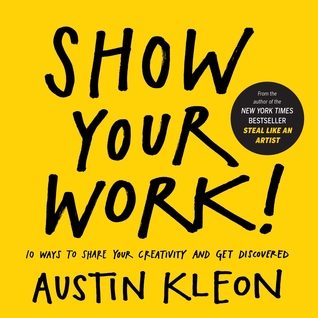
This book is like a sequel to Steal Like An Artist and is the one that I love the most. Similar to Steal Like An Artist, it's a small book with words and illustrations. It has just the right amount of content to get you inspired to do something.
Show Your Work tells us how to be an artist in the moden day, taking advantage of the new avenues available to us. It talks about why one should share their work, what to share, how to do it, and how to be an artist beyond just the finished product.
This is against the traditional idea that one should build in silence. All the advice and calls-to-action tell you to "disappear and reinvent yourself" or "build in silence to actually build", but what happens when you come out with the built product to silence?
It's easy to show your work as you do it today and it comes with a lot of advantages. There are a lot of people who do it/have done it and have proven that it's valuable to show your work. A few people that come to mind: jedcal (builds websites/products), Annika's Leaf (small business owner), Zhysin (café owner).
This book inspired me to write blog posts too, like my personal knowledge management system at work as a software developer.
A couple of my highlights from the book:
Whatever the nature of your work, there's an art to what you do, and there are people who would be interested in that art, only if you presented it.
The people who get what they're after are very often the ones who just stick around long enough.
AKA "the last man standing" strategy.
3. the artist's way by julia cameron

The Artist's Way is a 12-week course to teach you how to live creatively. It doesn't require you to go anywhere or follow a very strict deadline. You just have to buy the book and do it on your own time, the way you want to do it. You don't have to buy anything else. It does involve a significant amount of time and energy—like all the best things.
The Artist's Way is mainly for "blocked" artists. It's for people who don't think of themselves as artists but want to be one, people who are in a slump, or artists simply looking for more motivation or a rope to hang on to.
Each week of the course tackles a different issue that "blocked" artists have and there are 2 overaching artist "tools". The practices introduced in the book are the most powerful. The individual exercises may not do much and some of the book may be a bit too preachy for you, but doing just those 2 practices for 12 weeks makes a difference.
You can self-pace it too, no one's there to school you. Some do it alone or with a small group. You can choose to go hard on some tips/exercises and skip others. My friends and I made it a 24-week thing to reduce the time obligation per week.
I highlighted a ton in this book so it's hard to pick only 2 to include here.
First choose what you want to do. The how usually falls into place of itself.
A creative life is grounded in many, many small steps and very, very few large leaps.
Check out my experience doing The Artist's Way for more.
4. the art of creative thinking by rod judkins
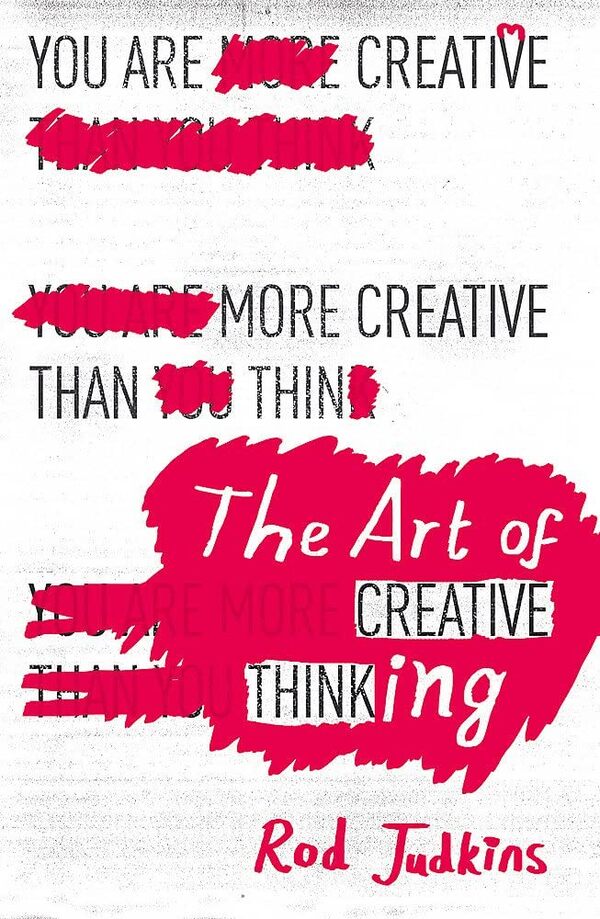
This is a great book to have on your bookshelf, in my opinion. It doesn't require you to read for a long time or in any order. It doesn't have any real structure. You can read it in any pace without losing any plot. But the best thing is that you can read to it for some quick and easy inspiration any time.
The Art of Creative Thinking is a book of anecdotes and quick, simple advice. Chapters are relatively linked to each other but aren't in order. You are free to read it in order or jump around. Each chapter in only a few pages long and takes 5-10 minutes to read.
The book doesn't bother to stick to a topic or narrative. Every chapter has a different topic or idea. Some of them are contradictory too. Art is not simple and it's not straightforward. This book tells you the ways art is, and should be, out of the box.
The chapters may or may not be relevant to you today but it is likely that there will always be a chapter that is relevant to you at any point in time. You have to take what you want/need from the book. It can be vague ideas to ruminate on or actionable ideas to do. You have keep an open mind.
This is one of my most annotated books because it gave me so much to think about. Here are a couple of quotes that I marked:
If you produce 100 ideas, one of them is likely to be great. If you produce five ideas, the chances of one being great are small.
Growth is painful and change in painful, but nothing is more painful than staying in the wrong place.
Read my full review of The Art of Creative Thinking.
5. building a second brain by tiago forte
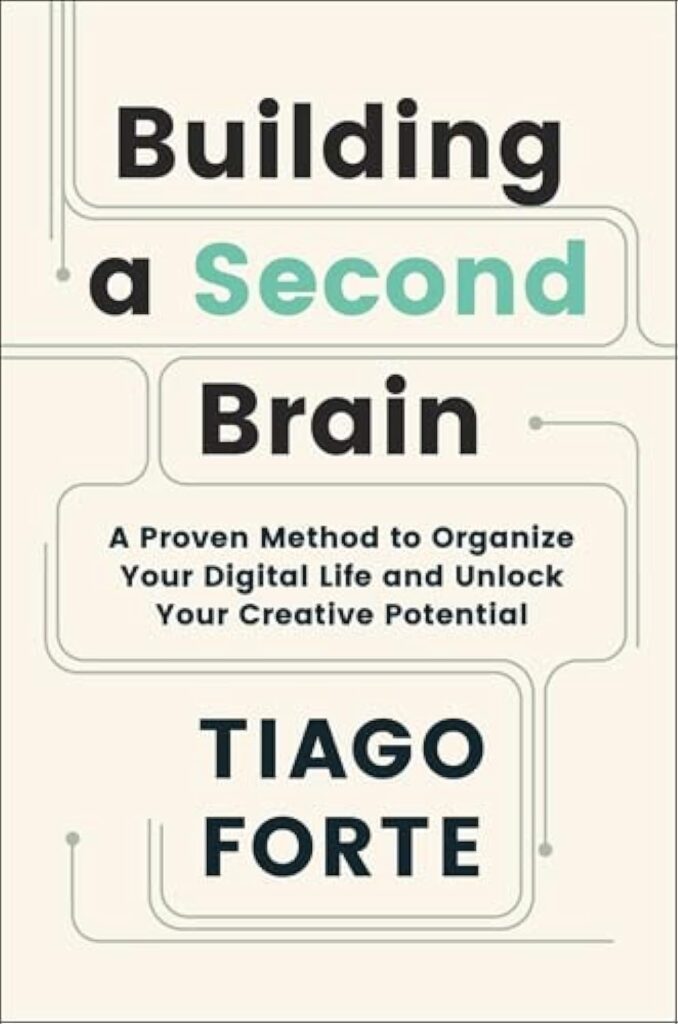
This is technically not a book about creativity but it does help you with it. I've been using the frameworks from this book for years now and it has really helped me capture my ideas, come up with new ones from my random notes, and never lose any of them. This blog post is from a note that I made years ago!
Building a Second Brain helps you create a proper note-taking framework that allows you to focus on creating instead of remembering everything. It talks about why, when, and how one to takes notes, what to do with them, and how to use them to produce work.
The book's main aim is to help with information overload but following them can easily help you create as well. It's been working really well for me so far (in both personal life and work), so I'm speaking from experience.
This is one of my most-annotated books too. Here are a couple of the highlights:
Once our thoughts are outside our head, we can examine them, play with them, and make them better.
Creativity depends on a creative process.
Read my full review of Building a Second Brain. You can also check our my digital organisation system.
chat with me!
Would you consider yourself a creative person? Do you determine it by the work you produce or the way you live? Have you taken any steps to be more creative or be a better one?

Sumedha spends her days reading books, bingeing Kdramas, drawing illustrations, and blogging while listening to Lo-Fi music. Read more ➔
It's interesting---I think in the age of social media and "content creators," a lot more people have become focused on the *aesthetic* of being "a creative" more than the *act* of actually being "a creative." We now think that "a creative" looks a certain way and has a certain lifestyle---they wake up early and journal a lot and dress aesthetically and take walks and go to cafes where they stare artfully out the window...but in the end, at the end of the day, what have they actually created and what is their actual relationship to their creation? Like, as an actual creative creating actual art myself (in my case, I'm a singer creating music), I couldn't give a flying eff about how I look creating art or what steps are necessarily involved in creating art or the fashion style I have or even the lifestyle I have. My focus is on the art I make and the relationship I have to it and (to a lesser, but still important, extent) the impact it has on my community. I am a creative by virtue of the fact that I create something, not based on anything else. I think these days a lot of people with creative potential get trapped in thinking they and their lifestyle don't "look like that of a creative," but, like, wtf does that even mean when the reality is the life of a creative looks different for everyone? Idk, maybe this impression is just a me thing? Bottom line for me is, live your life how you want---as "aesthetically" or as "non-aesthetically" as you want---and regardless, if you want to create something then go for it and know that regardless of looks or even of public or private recognition, the minute you create anything then you're "a creative."